Tuesday, October 26, 2021

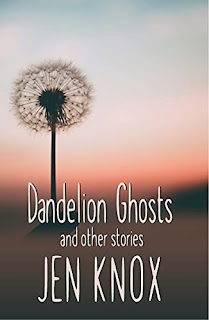
Chapbook release


"As our children walked in circles, their children shook their heads and made their way toward another life; new ghosts remained. And we began to band together to move beyond brick and basement, stone and soy, to create new riddles for all the children, as they rushed and argued, created and destroyed, and ultimately found out how little they knew." (from Dandelion Ghosts, the namesake)


"To move with the currency of life is to forget to stay still. At thirty-nine, Lee summoned the lions." (from Lions)

"Money was born at the backs of her knees. As a young girl she stumbled, and the coins piled up beneath her heels. It was a neat trick that caused her parents to sing the girl’s praises before making their demands and, ultimately, trying to rip from her what they couldn’t see. When the coins were all used up, they disappeared." (from Popliteal Fossa)

Read more here


Thursday, July 15, 2021

Flash Fiction


Popliteal Fossa

@ FLASH FICTION MAGAZINE


Money was born at the backs of her knees. As a young girl she stumbled, and the coins piled up beneath her heels. It was a neat trick that caused her parents to sing the girl’s praises before making their demands and, ultimately, trying to rip from her what they couldn’t see. When the coins were all used up, they disappeared.

As an older child...


Jen Knox


Thursday, January 28, 2021

Dandelion Ghosts

"We were born into curiosity and raised with a light touch. We ran around trees and chased ice cream trucks down the street or stared at the world through cameras and recorded what we saw in bound journals. The crumbling concrete alongside our homes led to narrow alleyways that promised adulthood. We congregated on the summer solstice, the longest day of the year, and marched past the plump blackberry vines and fields of dandelions. Stopping to taste the fruit or flick the heads of flowers into the alley, we enjoyed the last bit of childhood beneath a blue sky. Dirty..."


Read More Here:  https://flashfictionmagazine.com/blog/2021/01/27/dandelion-ghosts/?utm_source=email&utm_medium=social&utm_campaign=website-share-buttons

Friday, September 27, 2019

New site, late goodbye

Hello, Friends!

Observation: I am not actively blogging here anymore, but I never said goodbye.

I have never been great at goodbyes. But I'm not trying to duck out of the party while everyone blows out the candles. In fact, I never said goodbye because I never intended to stop blogging.

Meanwhile, my novel-in-stories, new day job, new (old) city, and new obsession with yoga + meditation kept me busy enough to keep me far, far away from this fading blogging site.

That said, I'm back in action! Got my routines, got some new perspective, finished the book ... and if you'd like to keep up with me, please find my new blog here: https://www.jenknox.com/blog

Keep up with me. :)

xo Jen


Monday, November 26, 2018

Observations: November 2018

Happy Holidays, Friends!

Where have I been? Um.

The short answer is Ohio, Pittsburgh, West Virginia, Massachusetts, New York, writing a novel-in-stories, completing my Yoga Teacher Training, reworking my business, teaching leadership at OSU, writing short articles on leadership and alternative health, attending family events, and wishing I had more time to do more of all of it.
Time is of the essence, and I am realizing right now, as I write this, that I miss blogging. I miss connecting with those of you I know and those of you who happen here and read this for a few minutes instead of clicking on that latest story about the comb-over fascist, our melting planet, the new "hot" personal robot, autonomous car fatalities, or cool tricks you can teach a pet raccoon.

The last year has been elucidating in many (sometimes painful) ways. I put my writing ambitions in perspective, realizing that I am not a writer, but a person who explores the world through writing. This has enabled me to be patient as I accept my personal writing journey.

Sounds defeatist to some writers, I know, but the fact is, it’s quite the opposite. Saying “I’m a writer” is all fine and good, affirming and all that, but it’s not what’s important. I was getting addicted to the title and subsequent baggage and forgetting the value of the art itself. This realization led to a new energy around my writing, and though my writing time has been limited, it’s been incredibly rewarding. More so than it has been in ten years.   

What else, what else…

Well, I’ve adopted a daily yoga practice that morphed into a yoga teacher training experience (that I had no time for) that is morphing into active yoga instruction. And this + writing = my evolution.
Thank you to JMWW for posting my philosophical meanderings, Sivana East and Elephant Journal for publishing new essays. Thank you to Curious Fictions for allowing me a small income from recent stories.

I now offer meditations and yoga for writers (and all) on a modest and very homespun YouTube channel, and I have begun writing coaching again with an emphasis on CREATING SPACE through art. I offer writing and yoga workshops, along with my coaching practice, but I have refined the way I work, so that I can offer a more customized and intense writing support system to each client. I also decided that video conferences are helpful for online students, so I am integrating video modules.
It’s rewarding work so far. It always was, but it feels richer somehow. I love to see people learn to own their voices and release expectations. In doing so, the payoff is pretty great. J

I am looking forward to Portland in March to meet up with writer friends new and old. I will be on the outskirts of things (off-site events the whole way) because that’s how I roll.

Cheers for now.

xo Jen


Sunday, April 22, 2018

Observations: Dublin Vacation


Dublin seemed the obvious destination. We would be close to various restaurants and tourist attractions. It would be easy to call a cab or rideshare, and stunning natural sights, such as the cliff walk from Bray to Greystones, were close enough by to visit by bus.

When I booked our trip to Ireland, it was almost a year in advance, and the excitement around the idea was palpable. The trip kept my husband and I going on twelve-hour days, during the coldest days of winter. If the electricity went out or we got a flat tire, all we’d need to do was mention Dublin, and the vibration in the room would heighten. Now in our late thirties, this would be our first solo vacation. Unlike all previous trips, we were not going to visit family for the holidays, nor did we have work-related activities waiting on us. It was just us.  

I told everyone. Friends, family, and work associates were either excited or feigning excitement for me. All I could talk about was how refreshed I’d be when I returned. An incredible trip was non-negotiable. After all, every minute becomes precious when the overworked are finally able to breathe.

Off we went!

After a redeye and a half hour cab ride, my husband and I were equal parts exhausted and elated. We arrived at 8 a.m. in need of a place to lounge before our hotel room would be ready. That first day, we bummed around in the neighborhood near Phoenix park, taking walks nearby with our luggage stowed safely at the hotel. We talked about how crazy it was that we had an entire week to ourselves as we reveled in our haze of gratitude, which was augmented by a good island rain.

Then came the next morning.

The cappuccinos and breakfast and questions. Why did neither of us feel settled? And why in the hell were we both still thinking about work? It shouldn’t have taken so long to purge our to-do lists from our busy minds, nor should either of us have done the inevitable … checked email. Not only was the email checked, but it was continuously checked. In fact, our first full day in Dublin was riddled with work-related anxiety that piqued in the middle of our first nice dinner.

There is nothing to be done when the inevitable travel argument arrives.

We both saw it coming on the headwind of jet lag, strengthened by the persistent proximity that a small hotel room demanded. We traded a few mean jokes after a our meal, which were received sourly and soon became truly mean comments, then accusatory comments about whose comments carried more acridity.

This is when it dawned on me that a true vacation could be impossible.

There came a point when my husband and I, two tough-knuckled Gen Xers, almost forty now, getting invitations to 20-year high school reunions, needed to remind ourselves that we have opportunity to slow down, and if we don’t take it, it could be quite some time before the opportunity returns. Mindfulness, living in the moment—it’s all so trendy because it’s all so necessary to offset the constant churning. But how to turn off the switch?

I meditate daily, so I can say with authority, it can take more than meditation. Sometimes, it takes a bit of good, old fashioned, Gen Xer grit—the same grit it takes to work so hard—to slow down.
On Day 3 of our vacation, my husband and I wandered the streets of Dublin. We breathed in the rainy, overly green beauty; its unabashed street art and poetry; its brightly painted doors that led to museum after museum, pub after pub. To combat our busy minds, we agreed to shut down the phones and walk until thoroughly and appropriately soaked.

We walked to the EPIC museum (which stands for Every Person Is Connected), to the Writers Museum, and to the National Museum of Ireland. We walked to shopping malls with slightly better-cut clothes than those at home. We walked to cafes and used our phones for little more than pictures. We soaked in the island moisture as well as its pride; its widely-promoted and episodic history of oppression and uprisings, captured so adroitly on a plaque on Parnell Street that displays a telling message by Liam Mac Uistin that ends “O generations of freedom remember us, the generations of the vision.”

The freedoms of all people are often taken for granted, even squashed by our desire to achieve. Or another’s desire to achieve.

We worked long days for years to buy a home, to be able to travel; we went into indentured servitude for a higher education that enabled us to work through weekends in order to find these small bites of freedom in the form of a few days doing little more than existing and consuming. Seeing Ireland, a country home to ancestors on both sides of our family tree, was the prize. We worked our adult lives for the freedom to read Uistin’s message and do a proverbial face palm as we reflected.

After the grit-filled walk, our fast-paced purging of burdensome thoughts, the trip truly began.
It began in the middle, and we came to see what was all around us. After 21,000 steps, then 23,000, then 26,000, our heels screamed, but we could see and feel it all. The fighting could be dodged after that purging, a sleepless night could be embraced, and the hundreds and thousands of people we walked with and past, those with whom we traded words and shared music in restaurants and malls, could all be met with presence.

Even those people we merely read about in museums, who couldn’t have imagined a reality in which voyages were taken so easily outside the mind, were points of connection. Those who would laugh at the idea of a small electronic device that could reach out to family from across oceans and offer us every comfort may have also been able to predict the burden of such immediate connectivity. 

Our perceived inability to disconnect is a self-inflicted oppression that seems heightened during times of supposed reprieve. But this, like jet lag, can be eased with time. And so, after walking it off the way we Midwesterners are wont to do, we began to enjoy. If you go to Dublin, I recommend that you buy a good umbrella and walk. Dine at Chapter One (there's an affordable pre-theare menu), walk quickly beyond Temple Bar (photo opp is enough), savor a Nespresso at the standing-only coffee bar, enjoy the museums.

My husband and I spent our last days enjoying the food and sights thoroughly. We watched those outside moving with heads tilted down and smiled at the few who looked straight ahead or over to nod. 

We are all going somewhere, but sometimes we need to pay attention to what is here, now. 


Writing News: Fiction is forthcoming in Juked. A few essays at Elephant Journal. An excerpt from my novel-in-stories earned semifinalist status from the Book Pipeline Competition, so I hope to have news there soon. #stillwriting


Saturday, February 17, 2018

Observations: February 2018

I spent a bit of January in San Francisco, San Jose, and Sunnyvale. The rest of the month was a blur of snow, work, family, and writing. In that order, unfortunately. Nonetheless, I learned and/or observed in January/early Feb:

  • Silicon Valley is full of contradictions. And super nice bathrooms.
  • The value of visual art is at least 50% backstory.
  • You never know who you're talking to.
  • A needless sex scene can ruin an otherwise good move (cough ... The Shape of Water).
  • Irony is something people don't like pointed out, but it needs to be pointed out.
  • If people want rights to your image, it's not usually for a glamorous shot. :) 
  • When partying with rich people, go for the second glass of wine. 
  • Driving a van is easy, parking a van is - as feared - tough.
  • Writing is a gift, but it's a tough one to keep.
  • Nonprofits are going to have a tough go of it under this administration. As are people. I mean all people. 
  • Yoga is my jam.


Writing news: New work in The Disconnect (as the name implies, you need to go in Airplane mode to read it). More new work in Flexible Persona. This one won an award (2nd place ... I'll take it). 


Thursday, January 11, 2018

Observations: January 2018

Is anyone out there?

Yes or no, I am back after a cross-country move,  a mystery stomach virus, a new job, and the quiet release of a new collection of short stories. It's been a busy couple months, and I have the eye bags to prove it.

It's 2018, and I have a few observations about the last few months, and the glorious/horrifying new year thus far. I thought I'd share...

  • Resolution should not be a bad word, and resolutions should probably never include any diet-related goals. 
  • Busy people are the most reliable solely because they have momentum.
  • Some fears are not evident until you are presented with a challenge. Case in point: I am thirty-eight, and I just realized I am afraid of parallel parking vans. 
  • Writers don't have a choice.
  • It's easy to lose focus when self-consumed.  
  • Mantras work, but they demand time. Same with meditation and any other mental training.
  • Health clinics in grocery stores are fine, but they need a separate entrance! Come on, people, don't make contagious sick people walk past registers, the produce section, and dry goods to get to the clinic. By that time, their airborne, germ-filled droplets have probably reached dozens.
  • #MeToo will only count if we continue the dialogue. This is not whining or lecturing. This is reality, and change is possible but only with conversation and consistency. 
  • Business people and artists seem to want recognition in equal measure. Likewise acceptance, respect, recognition. Same deal, different package.
  • Leaders are not necessarily good people, but there is such a thing as a good or principled leader, and we should demand that one lead our country. 
  • As much as we need to be entertained, not all entertainment serves us. (Just like as much as we need to eat, not all foods nourish us.)
  • Friendship is work, and it's the best work.

Writing News:

The Glass City is out! Buy a few ... you'll be glad you did.
The Best Small Fictions is out! 
Buy them both in multiples. Samples are here: http://www.americanpopularculture.com/review_americana/fall_2017/knox.htm

Friday, April 7, 2017

Observations: April, 2017

My father once told me he'd been a genius for a few days. For fewer than a hundred hours in his life, sometime in his early forties, everything made sense. All the pieces fit, and everything felt easy to him. In those days, art flowed (he's a visual artist), math was cake, the right word was always on the tip of his tongue. Answers came readily, and nothing felt overwhelming. The universal codes seemed to materialize everywhere. Then, he said, as fast as the feeling came, it disappeared.

I like to believe those genius days hit us all, though they will sometimes be more dispersed - seconds or minutes spread out over a lifetime. I woke up this morning, after what I think was a brilliant dream, worrying that all of my genius time will be spent asleep. One can hope we all have a few minutes to come.

Some observations from last month:
  • Today's terrorized are tomorrow's terrorists.
  • If you trust that people can rise to the occasion, good or bad, they usually will.
  • Belief in one's self is easy for a day, but becomes tougher to maintain as time passes.
  • Writers need to constantly remind themselves to value their words and value their time.
  • As I get older, I know what I like and I know what I don't like (but sometimes I still realize I'm wrong).
  • Artists need to fight harder, write/create more. #resist
  • Buying a house now is like building on a cliff when the view is most beautiful, just before the rampart begins to crack below us.
  • College lectures make me happy.
  • Human connections are everything.
  • A society is only as fiscally healthy as its people are physically healthy.
  • I should probably start journaling during these dark times. I think we all should.   
Writing News: "Lottery Days" was selected for inclusion in The Best Small Fictions 2017, guest edited by Amy Hempel. It should be out in September, and I'm really thrilled to be a part. I'll post a link when available. Also, The Glass City is in the works and should be out from Hollywood Books International around the same time. I'll post the date soon. In the meantime, I got in a few blurbs. Here's one...

"Jen Knox is a master cartographer of the human psyche. In the stories of The Glass City, she maps the depths and complexity of the human mind against the backdrop of a future so possible yet so surreal that it’s nearly futile to try to set the book down. I kept telling myself, just one more page before bed, just one more story—until I found myself turning the last page in the middle of the night, having forgotten to eat dinner. Ultimately, The Glass City is the miracle of artistic imagination at its absolute peak: read casually, it thrills and entertains us with insightful depictions of who we are; read deeply, it shows us who we can become." 
—Melissa Studdard, author of I Ate the Cosmos for Breakfast
Prompt: Start a story or a piece of art with the line/idea "I never told anyone..." Write as long as you'd like.

xo Jen

Sunday, March 5, 2017

Observations: March, 2017

A few observations for March....
  • Giving without thinking about personal gain ends up bringing personal gain.
  • I've meditated for over 60 days straight, and the only way this is possible in my life is to lock doors and/or wake up at 5 a.m.
  • I've meditated for over 60 days straight, and I'm just now over the angry-all-the-time stage.
  • Repetition, for all its simplicity, is probably the fastest way to brainwash large numbers of people.
  • People will only hear what they want to hear, until they see.
  • Distracting people is not difficult in the digital age. (This is what's happening while we're distracted by Twitter: https://www.congress.gov/)
  • Mobility is a blessing and a curse.
  • Magic is everywhere, but it can be condensed in story.
  • Transparency is both a blessing and a curse.
  • I cannot make myself enjoy drinking any beverage that contains bubbles.
  • Espresso, as a general rule, is far less potent than drip coffee.
  • If all adjuncts quit, the system would have to change (more of a speculation than observation).
  • Making space means creating opportunity.
  • Minds can change.
Also, a new story about coffee addiction, coffee pretension, and public speaking at The Saturday Evening Post, my favorite publication to work with.

Prompt: Pick a pic and write for 20 minutes: http://photography.nationalgeographic.com/photography/photo-of-the-day/people-culture/

xo Jen

Tuesday, February 14, 2017

Observations: February 2017

I just got back in town from a trip to Ohio, where I visited family, then a trip to D.C., where I hung out with 12,000 writers at the AWP conference. I learned a few things.
  • Saying goodbye is always hard.
  • Life will end, and might end soon, so live it up.
  • Shiny scrambled eggs will never fail to hurt my stomach (see: free continental breakfast).
  • Free scrambled eggs are tough to say no to (see: free continental breakfast).
  • Michael Bolton is rather funny.
  • Fiction does pay.
  • Sudoku can create the illusion that one is good at math.
  • Sleep is helpful when I want to be charismatic.
  • Sleep is helpful when I want to be coherent.
  • Airports are the only place I will read an entire magazine.
  • Daily controversies are exhausting.
  • There are a lot of writers in the world.
  • Writers are the best people in the world.
  • Lyft rocks.
  • D.C. is oddly enchanting. 
  • History reminds us how much we forget.
  • Twitter behavior says a lot about a person. 
  • Radical self-acceptance is great, but a healthy amount of self-critique propels growth.
  • The amount of talent in this world is staggering.
  • My neighbor's dog's howling coincides with ambulances (took me too long to figure out).
As a creativity prompt, consider a routine. Pick a place you find yourself often, make it the opening setting of a new story. Pick a routine, and try to incorporate that as well. As for your character, make him or her your opposite. If you're an extrovert, make this person an introvert. If you're cheery, make this person a curmudgeon. You get the idea.

Till next month, folks...

xo Jen

PS - I updated my site. If you check it out, let me know if it takes a while to load. I'm struggling with it. http://www.jenknox.com/

Monday, January 23, 2017

Short interview with Agnes Marton

What an inspiring week. After seeing the peaceful outpouring of supporters at the Women's Marches around the world, I can't help but feel hope for our country. People are power.

Speaking of strong women, I sent the amazing Agnes Marton a few interview questions and am thrilled to share them with you today. Agnes will speak on creativity and the creative life. So, without further ado...   

Agnes Marton is a poet, writer, Reviews Editor of The Ofi Press, founding member of Phoneme Media, Fellow of the Royal Society of Arts. Recent publications include Estuary: A Confluence of Art and Poetry (winning the Saboteur Award) and her poetry collection Captain Fly’s Bucket List. She has participated in an expedition to the Arctic Circle.


Hi, Agnes! Thank you so much for taking the time to answer a few questions. So as a writer, I'm curious as to what a day in your life looks like.
I have a day job – otherwise I avoid routines. I write whenever I can. I travel a lot. I love writers' residencies.

When did you know you wanted to be a writer?
At the age of four when I became a compulsive reader and storyteller.

What inspires you to write a poem?
Deep and complex feelings.
Anything unpredictable.
Myths (but then I create my personal mythology).
Travel (however, I don't describe the landscape – I observe how my attitude changes).

What's the last book you read?
'The Wonder' by Emma Donoghue and 'A Manual For Cleaning Women' by Lucia Berlin.

How did this collection come together?
It seemed reasonable to compile a collection of my poems while preparing for the London premiere of my opera 'Captain Fly's Bucket List.' I hadn't written the poems with the intention of compiling them but I put much effort in editing the book, in shaping the three chapters, forming an arc. Now, on my return from my Arctic Circle residency, the situation is different. My responses to this expedition will definitely make a book, I've known that from the very first minute.

Do you ever find yourself creatively blocked, and if so, how do you find your way through?  
Not really. I have a close look at some unusual details, and immediately feel like writing.

Do you ever use prompts?
Rarely. When I'm invited to submit to a themed anthology.

What advice do you have for other writers?
Don't write when you have nothing to say. Wait.

What is the best advice you ever received?
Leave your comfort zone.

What are you working on now?
I'm in collaboration with visual artists Sarah Gerats and Viel Bjerkeset Andersen, their videos are accompanied by my Arctic poems. Also, with composer Vasiliki Legaki, we are creating the extended version of our opera. It is scheduled to be performed at the Burning Man Festival in Nevada in 2018. 

Thanks for stopping by!

I'll be posting again in Feb, so prompts are forthcoming... in the meantime, here are a few links to writing residencies.

Friday, December 30, 2016

Observations: January, 2017

With the new year comes possibility. Sure, many of us are afraid for the health of America's states. We worry about the integrity of our new administration, we worry about basic human rights, we worry that families won't be able to afford basic healthcare and that our educational systems are broken beyond repair, but 2017 could surprise us. Our mistakes and complacency and greed are being amplified, and this can teach us a lot.

We got here together, to a time of disbelief and propaganda-fueled beliefs. We need to listen to each other more than ever before, and we need to talk to each other more than ever before. Things may seem dark, but I believe real change will come from it. In the words of the late Leonard Cohen: "There is a crack in everything, that’s how the light gets in."

In 2016, I learned:
  • Family is everything.
  • Fear can either be turned into energy or it can sap energy.
  • The weak and uninformed follow anyone who gives them a common enemy and an excuse, but there is no enemy greater than hate and division. #resist #listen
  • If there was an award for person who places as a finalist in the most contests, I'd win in 2016. (Or be a finalist.)
  • I wrote that last bullet point before I got the good news below.
  • The word elitist seems to fit as many republicans as it does democrats. 
  • When you help someone to achieve their dreams, yours are more likely to come true.
  • It's OK to say NO.
  • It's not OK to avoid answering questions you don't want to answer.
  • I'm getting old. ("I don't understand why these young people don't look people in the eye...")
  • Transparency is fine, so long as you're a willing participant.
  • With all the loss of talented artists this year, we have a lot of powerhouse angels.
  • Art is more important than ever.
In 2017, I will:
  • Write unapologetically and as often as I can.
  • Stand up for what I believe and listen to those I do not agree with.
  • Buy my first home.
  • Eat well.
  • Exercise well.
  • Try new things.
  • Call those I love, even when things are going well or I have nothing big to announce.
  • Support my writing friends.
  • Learn from my students.
  • Support my family.
  • Tackle big problems one angle at a time.
  • Run on my own terms.
  • Find the perfect computer bag.
  • Age gracefully.
  • Drink more water.
  • Travel every chance I get.
  • Say NO to what is too much without guilt.
  • Say YES to what I want but scares me.
  • Post to this blog monthly.
  • Listen to everything and make the best decisions I can.
I'm excited to announce that my unpublished short fiction collection, The Glass City, won the 2016 Americana Prize for Prose. I'm hoping the book will find its way to print soon. I also received word that my short story "Running Toward the Sun" got finalist status in the Aestas Short Story Competition 2016 and will be published in Fabula Press's Aestas Anthology soon.

Prompt: Write a short story or poem that begins with the line "The curtain parts, and..."

Thursday, December 8, 2016

Observations, December: Part 15

The best way to reach out is to look within. Sounds good anyway, right? It definitely seems the basis for meditation and the theme of Westworld, so how can it not be true?

I've been taking a break from social media, specifically Facebook, to focus on a few writing projects. In a way, looking within through art. Or maybe I'm just strategizing about how to live in a less-than-ideal reality.

Whatever the answers... here are my observations from the last month:
  • Don't take HVAC systems for granted.
  • Internet advertisers: Send me a coupon, get a click. Send me twelve coupons, I'll block you.
  • Most of us are dehydrated (drink some water).
  • Cold weather = increased coffee consumption.
  • Basic civics, logic, and humanities curriculums need more attention in America. Too many people are under-informed and easily manipulated. 
  • Art saves. Action saves. Bitching is just bitching.
  • There are way too many dystopic films for my comfort. (*cough* education)
  • One can resist respectfully. Love regardless. Love relentlessly.
  • House hunting is equal parts fun and a PITA.
Prompt: Your character is living The American Dream. What's his or her day like?

I published a few interviews at Black Fox Literary Magazine and Superstition Review, both on writing/the writing life. Check 'em out!!

Love, Jen


Friday, November 11, 2016

Observations, November: Part 14

I've had trouble distilling my thoughts since November 8th.

I have worries surrounding the future of our nation, including the very real loss of my rights as a woman. I am worried about the economy, foreign relations, a racist police state, and illogical and emotional responses to real threats.

I saw this morning that the president elect said something positive in regards to the thousands who are protesting his presidency. Something about how their passion for country is a positive thing.

I can only hope this small bit of positivity, if genuine and not written by an intern, grows. I did not vote for Trump, and I do not feel he is fit for the position. He is not my choice, and quite honestly, I am terrified. I am acting, in what small ways I can to reroute. In case we cannot, however, I do hope I'm wrong.

I am thankful that good people surround me, people who give me hope. They remind me that in the darkest of times, the light shines brightest. It is Veterans Day, and today I will be going to an event at an elementary school in which our writers-in-communities program has been coaching young people how to write poetry and personal essays. Our students have been working hard and having fun exploring their creative voices. They remind me that people are resilient and strong. Tomorrow's generation may still be about unity and inclusion. Today, the children will perform a poem in tribute to our vets. I am eager to see their light. I think we all need it.

I hope to be back to my normal self next month. Right now, I'm just too sad.

Thank you to all who served and serve. Thank you to those who are shedding light during a time of division.

In solidarity,

Jen


Tuesday, October 11, 2016

Observations, October: Part 13

I'm writing this after the second presidential debate. This, the town hall debate between Donald Trump, reality television star turned presidential candidate, and Hillary Clinton, former New York Senator and Secretary of State. The debate was painful to watch, and I won't dwell on it here, but I will say that I think our country needs the arts more than ever. We need a Renaissance, a wave of innovation and insight to offset what seems an increasingly uninformed and divided country. We need to grow, not devolve.

A few other observations from this past month:
  • This election engages. It engages because it infuriates, much like a bad script. I hope the nation does not condemn itself. I hope those who take the trouble to self-educate and read widely vote. 
  • Locker room talk is still talk. This is still a story. It will continue to be a story until November 8th.
  • People who go all-out with Halloween decorations are just good and fun people, in general. 
  • Westworld is reflecting some scary truths.
  • Clowns are just fine. Scary clowns are not. Not all clowns are scary. (Logic!)
  • The news today feels like the bad day-time TV of my youth.
  • The first few cool days in South Texas are divine.
  • Teaching is one thing, teaching well is another.
  • There is nothing as gratifying as a good story.
  • Marginal utility should be practiced with all food and drink. It just makes sense.
  • Loosing the internet at home for an evening can lead to unexpected peace.
  • Reading is good for the soul, so check out my new short story, a ghost story: FORTUNE IN SMOKE at SFWP Quarterly.
Ahti watching Westworld

Creativity: Write about or draw a clown who is a hero, a champion of all things good. By doing so, you may write a fantastic short story/create good art and restore balance to the world.  

xoxo

Jen

Monday, September 26, 2016

Observations on Mood, September: Part 12

Here's the overview of my day so far (if I survive, it might be comical): illness kept me up in pain all night; in the morning, I purchased the wrong item at the grocery, so I had to go back; rain flooded my neighborhood; lunch looked good but wasn't; I finally got reimbursed for a extraneous charge from a company but ended up having to pay more than that for my prescription because I haven't yet met my deductible; I got backed up on work; I took a pain reliever that gave me hives; I logged on to gmail to find that everyone who hasn't gotten back to me in the last two weeks decided to email me today; I had trouble concentrating because I was tired; I responded to a personal email after misreading it, so had to respond again, but the person had already responded to my response, so it kept on; my leg fell asleep when I tried to meditate, then I fell asleep and almost hit my head on the wall (still trying to meditate); I found it difficult to exercise; and so on.

This day makes me want advice, but instead of asking someone, I'm thinking about all the advice I'd give someone else who is having a bad day. Are you having a bad day? Ordinarily, I'd say...

  • Meditate
  • Read
  • Exercise
  • Eat well
  • Talk to a friend
  • Be grateful for what you have
  • Drink lots of water (I say this to people no matter what's wrong)
  • Take a bath
  • Take a long walk
  • Hang out with your dog or cat or bird

I didn't drink that much water today, but I tried most of this other stuff at some point. Now, I'm brooding. I'm dwelling in my misery, digging deep into it and adding up all the factors. In fact, I'm starting to feel a weensy bit better with each word I type, so maybe the secret to being in a bad mood is to just own it fully. Maybe when we try to fight the bad feelings, they fight back.  


Creativity prompt: Write or paint or sketch something inspired by a truly horrible day. (The book above is fantastic, by the way.)

Recent publications (short stuff): Polygon in Chicago Literati, Lottery Days in Literary Orphans.

Monday, September 19, 2016

Interview with the author: Alexandra van de Kamp

After reading her new poetry collection, Kiss/Hierarchy (Rain Mountain Press, 2016), I was eager to ask Alexandra van de Kamp a few questions about her work and routines. I first met Alexandra two years ago at a simultaneously wonderful and disastrous reading that I put together at San Antonio College (wonderful because of the amazingly talented readers and disastrous because we lost electricity, but I digress). Over sweet potato fries and craft brews at The Cove, we got to know each other. I soon found out that Alexandra is not only a nice person but an extremely talented writer.

Shortly after we met, we had coffee and realized we were both being considered for positions at the same literary nonprofit, Gemini Ink. Since then, I've had the privilege of getting to know Alexandra as a co-worker (who organizes and hosts amazing public events [always with electricity] and classes in the area) as well as a friend, who is smart, funny, and generous beyond words.

Enough backstory about how I know Alexandra. I am eager to introduce both the woman and her work to you...

Hi, Alexandra! Thank you for taking the time to speak with me today. As you know, I love Kiss/Hierarchy. Many of the poems in this collection begin with a narrative easing-in: either an observation that piques the reader’s interest or a direct appeal in epistolary form. The poems invite a reader to glance over the shoulder as a letter is written, walk alongside the narrator as a landscape is consumed, or hold the magnifying glass as persona is carefully taken apart and put back together. Who or what is the audience you envision as you write? Is audience only considered after a poem is complete?

Wow, what a rich question to contemplate! I guess you could say that I try to write poems that invite the reader in, in different ways, and sometimes that is a more narrative gesture (as you have so astutely pointed out), and sometimes it can be the allure of the sounds of words or just a single image that snags in my mind. For example, the title poem in the book, “Kiss/Hierarchy,” actually was triggered by reading the dairies of Anaïs Nin and coming upon a single statement that immediately made me want to respond to it. Nin states, rather coyly, “There are two ways to reach me: by way of kisses or by way of the imagination. But there is a hierarchy: the kisses alone don’t work.” And this statement immediately made me want to challenge/explore the idea of the appeal of kisses and to take on this division that Nin had set up—between the imagination (and its role in our mental lives) and the role of kisses (and the phenomenon that they are in our physical lives).  It also became a sort of game for me to test this dichotomy in our lives between the sensual and the intellectual. So, I guess if I attempted to describe the audience I was writing for (something I do not contemplate very much during the writing of my poems but do wonder about once I’ve written a book and hope it sells!), I would say I’d love to lure in those with an insatiable curiosity about the world around them, who take little for granted about what makes up a daily “reality,” and who are intellectually generous in how they absorb and entertain new ideas. That said, I do not have an over-defined idea of my audience, and I wouldn’t want to over-restrict it in any way. I think my poems tell me what they want and need to say (on a good day!) and the audience for the work comes out of this process.
Available on Amazon
and from Rain Mountain Press

Where were you when you wrote these poems? How long did it take for them to come together?

I wrote all of the poems for this book when I was still living in New York—the North Shore of Long Island, to be exact. I’ve only recently moved to San Antonio, TX in the last year and a half. I take a long time to compile a book of poems (I seem to write chapbooks, collections of 25-30 pages, much more quickly). My husband and I rented a little cottage on the North Shore of Long Island because we were both teaching and working at Stony Brook University at the time, which was nearby. I remember the summer for 2006 being especially fertile writing-wise. I had a span of 1-2 months to write after a really intense semester of teaching, and I just recall hunkering down in that little cottage, letting myself dwell on my first Long Island summer (after having lived in Brooklyn, NY and slogging through some pretty hot and humid urban summers) and reveling in the green around me, the flora and, even the inch worm infestation that summer. All these inch worms were dangling from the trees, little unravelling green bodies. They were a nuisance but I liked them! And this was when I began to write poems more overtly triggered by the sound of words—letting the music of the language become its own logic. This is why you find poems in my newest collection, Kiss/Hierarchy, that are titled things like: “Dear A—“ or “Dear S—“. They were epistle poems, as you’ve pointed out, but epistles addressed to the sounds of letters and to the associations and lyrical leaps that arose for me while allowing words beginning with these sounds to lead the “narrative” in each poem. So it took me 10 years—2006 to 2016—to get the poems I started that summer published and compiled as a full-length book. Of course, I actually wrote most of them by 2014. In that decade I also published two poetry chapbooks as stepping stones to the full-length.

“The Electrician” stood out for me. It seemed the voice in this poem was less exploratory initially, more about asserting a certain power or position in the world. But by the end of the poem, I got the sense that the familiar narrative style is there, behind the scenes, exploring the voice, exploring the assertions. What inspired this particular poem?  

I actually had an electrician visit our Long Island cottage to fix some old light fixtures, and he was a rather contemplative personality—not something I typically related to electricians (my fault for having a somewhat limited view of this profession), and it made me ponder what it must be like to be the one “fixing light” all day long and toying with electrical wiring. I know the role of an electrician can be a tricky one (and dangerous), but this guy had a sort of laconic air about it all and told me some stories about crawling into tiny, intricate spaces to correct extra tricky electrical problems, and suddenly this persona poem came about. I, of course, had fun playing with the very focused point-of-view of this profession and came up with images like: “I finger the wormy wires, un-cup/the fixtures and peer/at their sex. I know what grows, / furtive as thought, in the porous/ walls of houses.” Each profession has its own obsessions. I am contemplating writing a persona poem about a dentist. Can you imagine staring into people’s mouths all day long—what a perspective that would create?

As a fiction writer, one who stumble-writes the occasional prose poem but has no real academic concept of form, all I know is whether/how a poem affects me. I feel oddly lucky that I get to experience poetry in this way, especially poetry like yours that builds and takes unexpected turns.

Considering this, one commonality I noticed in your book is that after the narrative lure, your poems coil in. I begin to feel the pressure build as your increasingly textured words examine the nuance of life, the moments inside moments (“the liquid bird/ inside that night”). The poetic experience is visceral. 

In other words, you are not afraid to write a sexy poem, a poem with body and swagger. Has your poetry always come out with such swagger, or did you have to work up to it?

Thanks for such a beautifully-written, thoughtful question, Jen. “Poems (that) coil in…”  hmmm I like that idea. I have never thought of my poems having “swagger,” but I find it really interesting that you do! I think I did have to work up to creating a certain crescendo or tension in my poems. Once again, a lot of this has to do with me following the sounds of words. I think this freed me up a bit at a point in my writing life when I was looking for new triggers in my work and was moving away from the more straightforward narrative style I had been writing in (a style I still love, but I was just looking for new ways into my writing process). Because I leaned on sounds as the “spine” of my poem rather than a more linear “plot,” I think it helped a certain energy occur that might not have arisen otherwise. It also built surprise into my writing process. I came up with words and images I may have never considered before just because of riffing on a specific sound. I also learned the importance of embracing a sense of play in one’s work. Not play in a frivolous sense, but a sense of deep play, a willingness to let go of my writing process a bit to allow the unexpected to enter into it or to write with a sense of playing with sounds and the feel and texture of words and seeing where that led me. I do believe in the “visceral” knowledge of language. That it has a breathing, physical presence and power, and I’ve enjoyed leaning into that more lately. It’s shown me the words know more than I do if I just trust in them and their own internal logic. Does that make any sense? I hope so.

The cinematic nods and strong location-based curiosities and appreciations of people and their roles – and what is behind those roles – are recurring themes. What inspires you about film, about our various roles in life and art?  And why?

I have written a fair amount of ekphrastic poetry in my life—poems inspired or somehow obliquely influenced by the visual arts—a painting, photograph or sculpture, etc….  I see film as just visual art in motion, moving images literally. I have learned so much from the world of cinema, how the mood, texture, and light of film can create a whole other reality alongside our own. There is a long history of writing about or through film, dating back to the surrealists like Apollinaire and Max Jacob, who were writing in the early 20th century, when film was just coming into being. The speed of the images in film and the new juxtapositions of imagery and scenery it offered deeply impacted poets back then and has continued to do so ever since, from the avant-garde French poets, such as Pierre Reverdy and André Breton at the time of WWI, to American poets like Frank O’Hara, writing in the 50s and 60s, to contemporary poets now. O’Hara was keenly influenced by the world of film and often dropped cinematic references into his work. His well-known poem “Ave Maria” published in 1964 (Lunch Poems) is an example of this. In this poem, O’Hara’s reference to the soul “that grows in darkness, embossed by silvery images” captures the otherworldly, dreamlike feel of the cinema, especially when experienced in a theater. I think the world of movies has given me the permission to write more dream-like work, or poems not limited to a linear logic. In this way, watching film has freed me up as an artist, and I return to it again and again for a certain permission to view “reality” from unexpected angles and to let my work be drenched in an atmosphere or mood I find unusual or intriguing.

What is your writing routine?

I wish I could say I have a well-honed routine, but I have learned over the years what works for me and what does not and have come to respect my need for certain parameters to be in place that allow me to write. For example, I write better in the morning than at night (although I’ve learned taking a little afternoon nap can give me a boost that allows me to write in the evening as well).  But I am not one of those writers who finds their groove at 1am! I often let myself read first before worrying about writing something myself. In other words, I know I need to let myself gestate a bit before putting pen to paper or fingers to keyboard. When I was living in Madrid in my late 20s and 30’s, I rented this apartment with another apartment mate, and my bedroom literally looked onto the wall of the opposing apartment (what the Spanish would call an “interior” view because my window faced onto the inside courtyard of the building and not out onto the street). However, I learned that all I needed was to brew a good cup of coffee, and let myself stare out that window, meditating on the opposite white stone all. Really do nothing at all for about 15 minutes or so, and trust my mind to go where it needed to go. Then, I was ready to do some work. So I think I need a certain quiet, the feeling that I don’t have five things scheduled for the day I am trying to write within, and a feeling of permission to let my mind play and wander. And, of course, a computer or journal nearby.
I’ve also gotten less fastidious over the years, and have learned I need not have hours free to write but can compose something in less time and that sometime I write fairly decently when stressed or feeling anxious. My idea of the “perfect writing time” has loosened up. Life is short, and you just can’t wait for things to be “perfect” to write! Sometimes you have to just take a stab and see what happens.


What are you working on now? 

I am working on new pieces for a third book of poems. Some of these poems are influenced by having moved to South Texas in the last year and a half. The green, exotic flora of San Antonio intrigues me. I’ve never lived in a place with palm trees, cactus, and grackles. I also continue to be influenced by the world of the movies and by the textures and sounds of words. And I just let reality be its own “movie” and am open to whatever images or experiences I may encounter on a daily basis. I don’t like to over-pin down what I am currently working on because often I don’t know until I am doing it! I am also working on maintaining a blog in which I offer mini-reviews on poets and writers I admire and post occasional musings on movies and the writing process itself. I also love to write prose poems and am toying with writing a collection of prose poems or prose vignettes. But mostly, I am writing poem by poem and building my next manuscript.


Thank you so much for taking the time to chat with me, Alexandra!


Thursday, August 18, 2016

Reflections from Marfa: 2016

The drive from San Antonio to Marfa is full of snaky roads and rock fall warnings. Taking I-10 through the hill country toward West Texas, the landscape is marked by rampart and cacti; the radio station options go from a few dozen to two. My husband and I listened to horse raising commentary interspersed with a sort of country music free-styling session. Our dog sat in the backseat, at first upright and ears perky, then alert and curious, and finally slouching and timid. Erm … where are you taking me?

The winds hit as I heard the hook “if you’re gonna play in Texas, you gotta have a fiddle in the van,” and things got Hunter S. Thompson weird from there (sans mind-altering support). We stopped at just about every gas station we could find as we made our way further west. If driving to West Texas, remember that bathrooms are an opportunity to seize, not a guarantee.

As the roads twisted higher and the mountains surfaced along the horizon, we noticed fewer road signs and more border control vehicles. Marathon, TX was is a ghost town on the Sunday we drove through, but we were able to find gas and grab a picture from the base of a hill before setting sights on Alpine, home to Sul Ross State University. The town, at about 6K, hosts a few food trucks and a coffee shop with a laundromat attached and a scrabble board ordering menu. Dogs were welcome everywhere, it seemed, and “everywhere” could be exhausted in a few hours with enough motivation and mobility. We walked and soaked in the beauty of the mountains in the distance, and we looked for people, figuring they must be hiding somewhere. We walked.

About twenty minutes away (if you drive hella fast), Marfa waited in all her divine dissimilarity.


Population of approximately 2K, Marfa was once home solely to ranchers but now houses artsy folk from Los Angeles and New York, thanks to the foresight of minimalism without motion. To find art in life and not spend endless conversations debating art philosophies and trying to navigate the ever elusive art circles, Donald Judd moved to Marfa in the seventies thanks to a fellowship that allowed him to expose the small city’s heartbeat with the construction of markers that shone light on the contrast that occurs in life.

Walking around Marfa felt like a large-scale treasure hunt. Unlike geocaching, I didn’t have to move rocks or climb mountains to find my treasures, however. Instead, I needed only pay attention. The barren landscape was dotted with brilliant, clean, minimalist art that seemed to both complement and conflict with the city that it housed. While venturing to Marfa restaurants and bars on a Sunday and finding only two of the seven Yelp suggestions to be open, Chris and I wound up at the one open bar.
This bar could have easily been in a small Ohio town or, really, any small town, but instead of a surly or worn-looking bar tender - someone whose life choices, situations, and work history have been etched into her face, this bar, replete with sticky floors and two-three patrons who looked as though they were there daily, was tended by a woman whose cherubic features and angular style suggested adopted, rather than inherent, struggle. She was clean and smooth skinned and unworn.

After chatting with some of the locals, who were descendants of locals, I came to understand that there is a generations-deep feud between Marfa and Alpine that dates back to ranchers who used to own all of the land. I also came to understand that guests in Marfa are welcome and hospitality is almost a competitive sport. After exploring the outside bar area, which contained a street light and a swing above the gravel floor littered with American Spirit butts, we walked in the cool desert air toward Hotel Paisano, the site of the Elizabeth Taylor Movie, Giant. On the way, we passed a gas station (food!) and a few other small shops and stores that were open only Thursday through Saturday. We ended up eating dinner at the hotel, which was rather good. Though I don’t recommend the fish tacos, everything else was divine.

The thing I noticed most about Marfa was a sort of pervasive peace. Everyone we spoke to was kind in an unrushed way. I caught myself having conversations and feeling an ephemeral tug of the chin downward, as though I had a text to answer or an email to send. What an odd and strung-out sort of feeling. Though I admittedly spent the first day taking a shit ton of pictures and posting them to Instagram, the second day was about accepting that quiet wholeheartedly.

Marfa reminded me how much I crave such time. To be with one’s self and one’s loved o
nes in silence is a gift rarely allowed in our transparency-above-all age. As though planted, a Marfa rainbow greeted us at an art school as we walked around, bellies finally full, noticing the number of cars (mostly trucks, actually) we saw could all fit in a doughnut shop parking lot with spaces to spare. The quietude was mesmerizing and important to me.

When we went to the lookout to see the famous Marfa Lights, we weren't disappointed to see only a few car headlights coming up the road. Each set contained promise, then the emotional equivalent to a shrug of the shoulders. Not indifference exactly, something nearer understanding. We stared out at the mountains, until we began to yawn. A local later told us that you don't always get to see them, and that he thinks they're staged. Perhaps. Some people beg to differ. To us, it didn't matter. 

“Marfa is the place people go to disappear,” a friend said before our trip. I only wish I could’ve kept the invisibility cloak on a bit longer. I turned 37 in Marfa, and I am going to remember the city's influence, artistic and inherent. I will attempt to carry some semblance of its odd peace and simplicity with me this year.  


Creativity prompt: Go somewhere quiet. No coffee, no food, no books, no computer. Just bring a pen and paper. Write.

Monday, August 8, 2016

A Month of Observations, August 2016: Part 11

Some thoughts in August...
  • The best way to not write is to talk about what you're writing.
  • If you want to feel better about your decision-making skills, put your chess app on Level 1.
  • Name changes are a PITA. 
  • When you have 4 teachers and and only 1 student, that's one lucky student. #truestory
  • You shouldn't sip espresso. If you do, you don't get it. I'll show you how it's done.
  • The right lighting is everything.
  • The right friends are everything.
  • The right place at the right time is cool.
  • The right direction without GPS is genius.
  • The right decision can't be over-analyzed.
  • Adjuncts don't get paid enough. 
  • Nonprofit workers don't get paid enough.
  • The cannabis industry, globally, is something that people like to wave off, then secretly invest in. #truestory
  • If no one listens to you, that's permission to say whatever the fuck you want.
  • When you can get comfortable out of your "zone" and sit well with embarrassment, you're a rock star. 
*Creativity prompt: Write a story in a genre that you never ordinarily read. Just try it. Then read a bit in that genre and see how close you came. 

Chapbook release

"As our children walked in circles, their children shook their heads and made their way toward another life; new ghosts remained. And w...